Saturday, October 28, 2006

Swallowtail Shawl in Silk


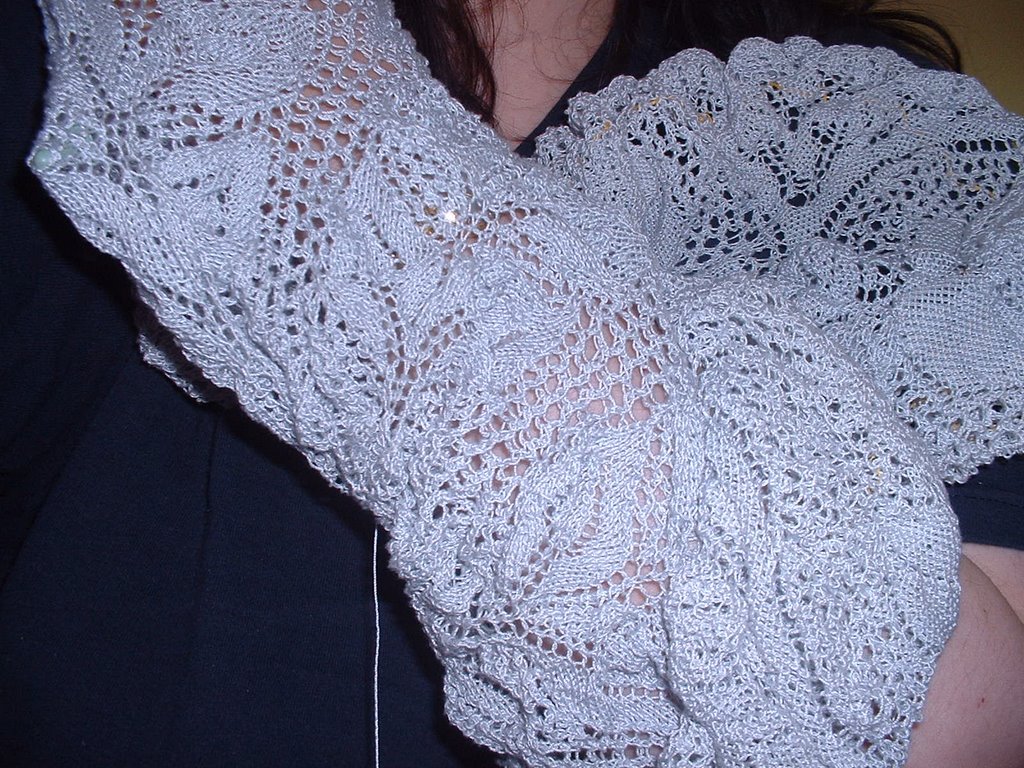
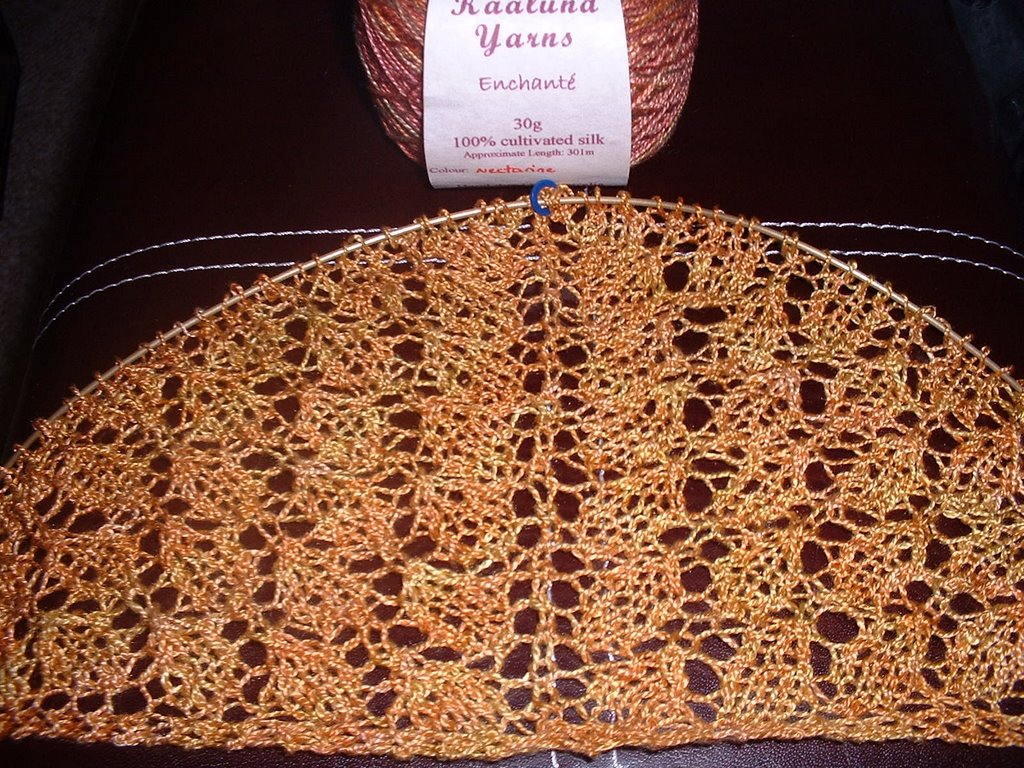
The Swallowtail Shawl from Interweave Knits Fall 2006 issue appears to be everywhere in blogdom. I had decided to make this short, lacy shawl when I first saw it a couple of months ago, before I knew about the knitalong blogs. Yes, there's more than one!

I'm glad I waited to find just the right fiber.

This yarn is Kaalund's Enchante, a 100% silk laceweight. It's a superfine laceweight, but not cobweb. And the
colors! I'm using Silky Oak for the first section - a subtly variegated peach and gold - and I'll finish it off with Nectarine (the slightly more peachy-red yarn ball in the photo). I'm hoping it will look something like a sunset, but the proof will be in the lace.

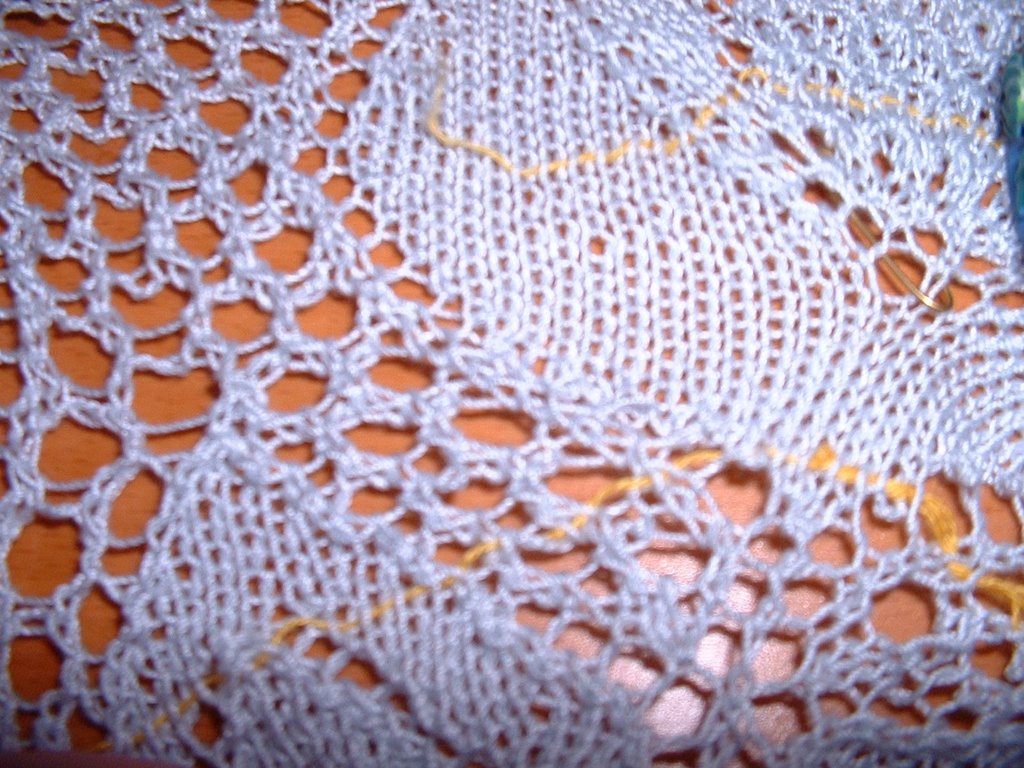
So far, my only qualm about this yarn is that it doesn't "give" or stretch, so knitting the p5tog's in the Lily of the Valley border is a challenge. I choose to knit these nupps with a small crochet hook. The shawl is on a size 4 circular, and the hook is #5 steel.

What works for me is sliding the hook from right to left under five stitches on the lefthand circular needle, hooking the working yarn and pulling a loop through the five stitches. Then I slide the five stitches I just worked off the lefthand needle and put the new loop on the righthand needle.

Saturday, October 21, 2006

Niebling Small Doily - Starting & Ending Tips

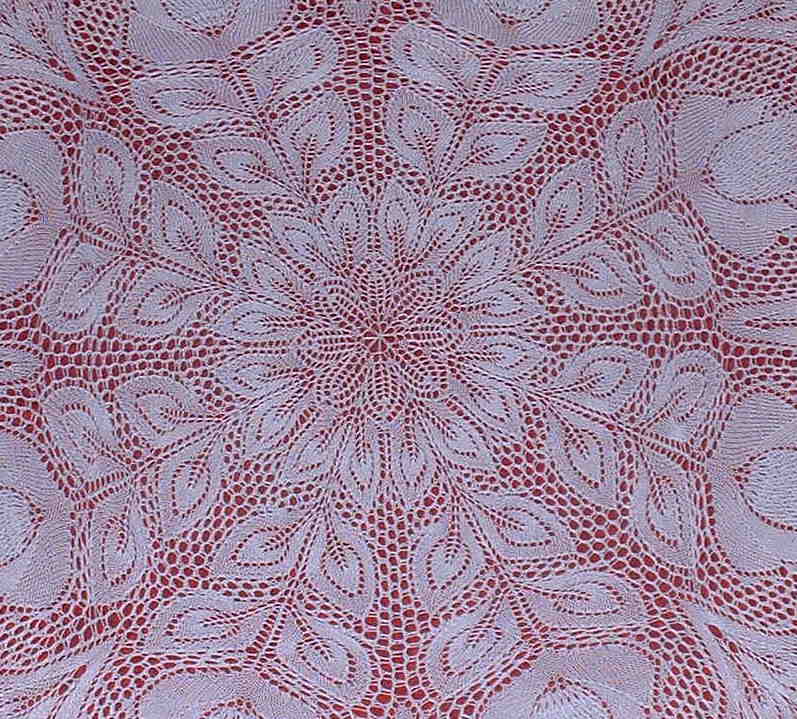
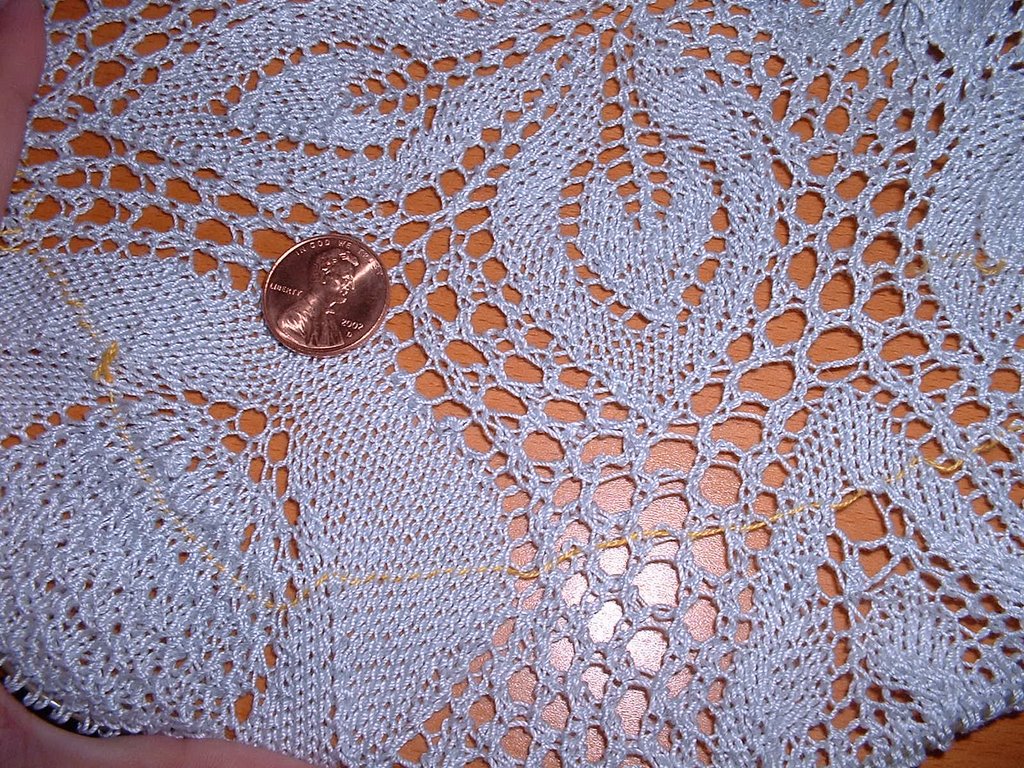
Here's another finished Herbert Niebling doily! This one is from a pattern published in Lena magazine (Germany). This September 2006 issue also contains a lovely Niebling tablecloth pattern.

Many thanks to Courtney on the
laceknitters list for the translation from German to English!

Also many thanks to
Judy Gibson who researched and found the smaller doily was published previously in Kunsthakeln & Kunststricken, as part of a series, and called "Strick & Shrick, Sonderheft No. 3." Judy notes that the designer Niebling is not credited in the previous publication.

I made the doily using size 0 needles and DMC Baroque thread. This thread is not my favorite, but it does block nicely. It doesn't have the silky sheen of DMC Cebelia thread. I would recommend Baroque for everyday items and Cebelia for heirlooms.

Some people have asked how I start a doily like this. I prefer the
Emily Ocker start, something I learned a long time ago. Basically, make a loop of yarn around your finger, and then crochet the number of stitches needed to start the doily into it. Then, divide up the stitches onto DPNs and start knitting. When using fine thread, it sometimes takes me several tries! The DPNs have a tendency to flop around, so I support them on top of a pillow on my lap until I've knit a few rounds. After knitting a few inches of the pattern, I pull the tail of the thread to close up the center hole.

Another method for a circular start is
Rosemarie's bellybutton start, which has become quite popular with lace knitters. This is similar to the I-cord start, which entails knitting a short length of I-cord with scrap yarn, then switching to the project thread to begin knitting your pattern. After knitting a few inches of your pattern, you can unravel the I-cord, weave the tail of the project thread through the first pattern row and pull the tail snugly to close the center hole.

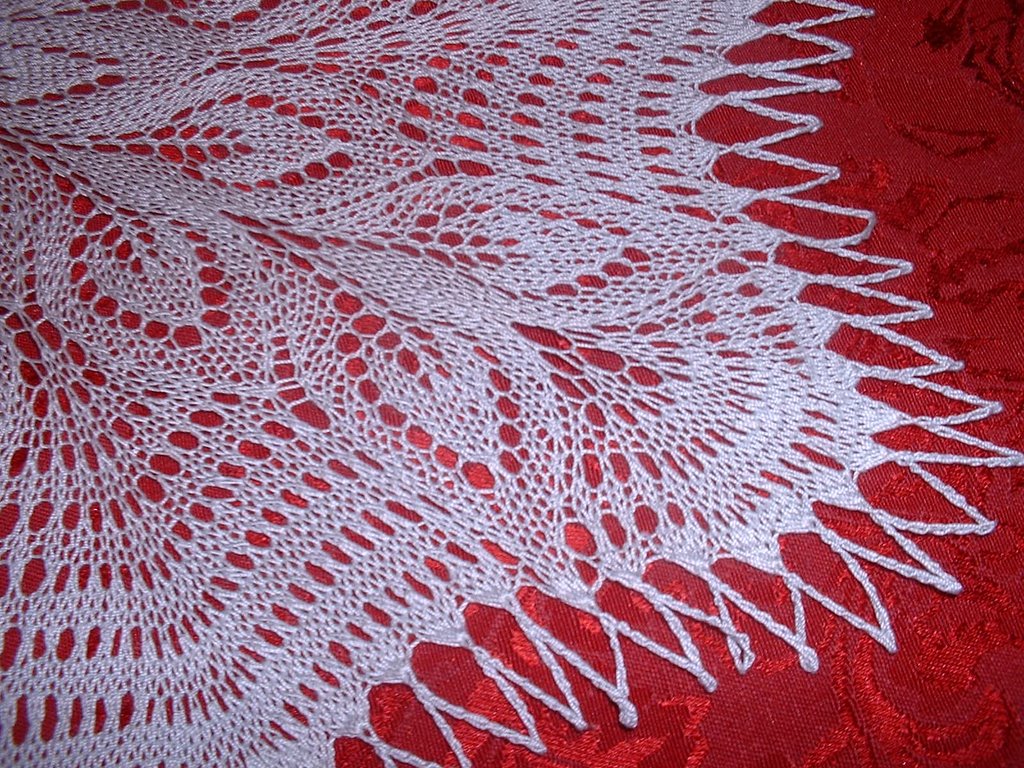
Finishing is another story. I came across some very old German steel crochet hooks at a flea market a while back and bought about ten of them in various sizes. Some of these old hooks have sharper tips than most modern hooks I've seen. For me, a pointier tip is great for crocheting off a doily. This Niebling doily required slipping five stitches off my circular onto the crochet hook, then slip-stitching through all loops on the hook, leaving one stitch on the hook. Next, I chained 12 (ch12), then slipped five more knit stitches onto the crochet hook, continuing in this manner until all stitches were crocheted off.

To block, I rinsed the doily in cool water and rolled it in a towel to soak up excess moisture. I pinned out each ch12 to a a nice sharp point. I also measured the diameter all the way around to make sure the doily was round and even. A good blocking board is essential.

Sometimes I use spray starch or "sizing" to finish off a doily. I only do this after the doily is blocked and dry. This is fine for doilies that see occasional use and may be washed and blocked again. If a doily will be stored for a long time, I don't like to use starch which may yellow with age.

If you press a doily with spray starch, I suggest using a hot iron with steam, a dry doily, Niagara spray starch, and a white towel or pilowcase underneath on the ironing board (or you'll end up with a starchy ironing board pad). Personally, I prefer the texture of an unpressed doily.

Of course, there are many ways to to start and finish, but these are the things I've learned and have used with some success.

Thursday, October 05, 2006

Architectural Fall

September ... what happened to September? Okay, I've been neglectful, but now it's October and Fall has dropped beautiful colors all around me. What project to take on next? I've got several in mind, and a few were started in busy September.

Kristin Omdahl shared with me a few new patterns to spice up the fall and winter. I'm currently working on a luscious wrap in Paca de Seda yarn, 80% wool and 20% silk. This stuff is soft and drapey ... and very warm for the cool months ahead.

I went to the
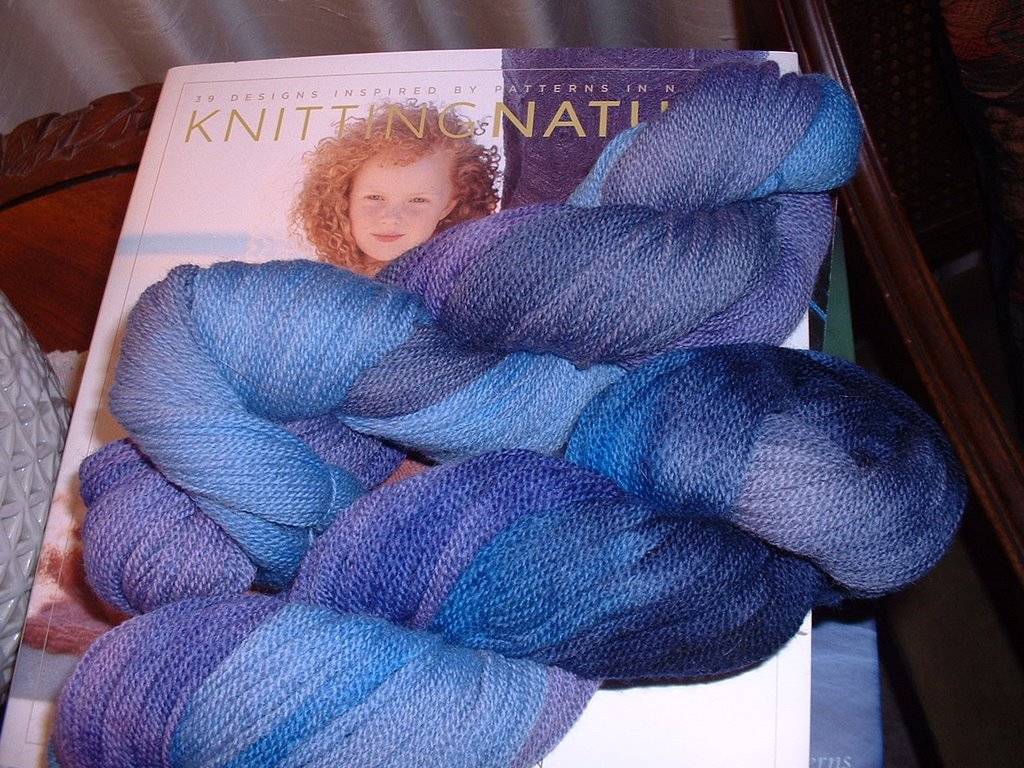
Knitting Nature trunk show at Greenwich Yarn in San Francisco and saw firsthand the fabulous sweaters featured in Nora Gaughan's book. The Ogee Tunic is absolutely lovely, knit in a fine yarn with distinctive textural features that set Nora's patterns apart. The other sweater that I found elegant with tailored finishing is the Ram's Horn Jacket. I'd probably make it a bit longer for me.

By the way, those two gorgeous skeins of laceweight wool pictured on top of the book are from
Inspirations Yarn. Margaret hand dyes her yarn in small batches, and the colors are phenomenal. These two lovely skeins want to be something, but I'm not sure what yet. I've got about 840 yards.

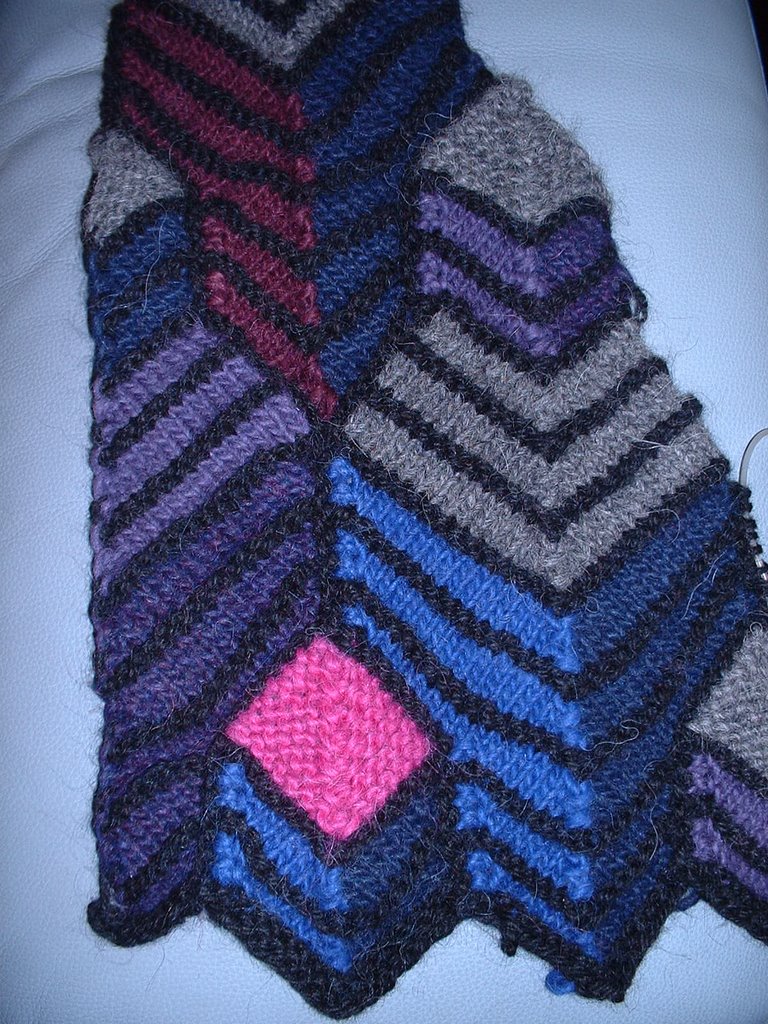
I also began working on something I had been thinking about for a long time. The last pattern in the book
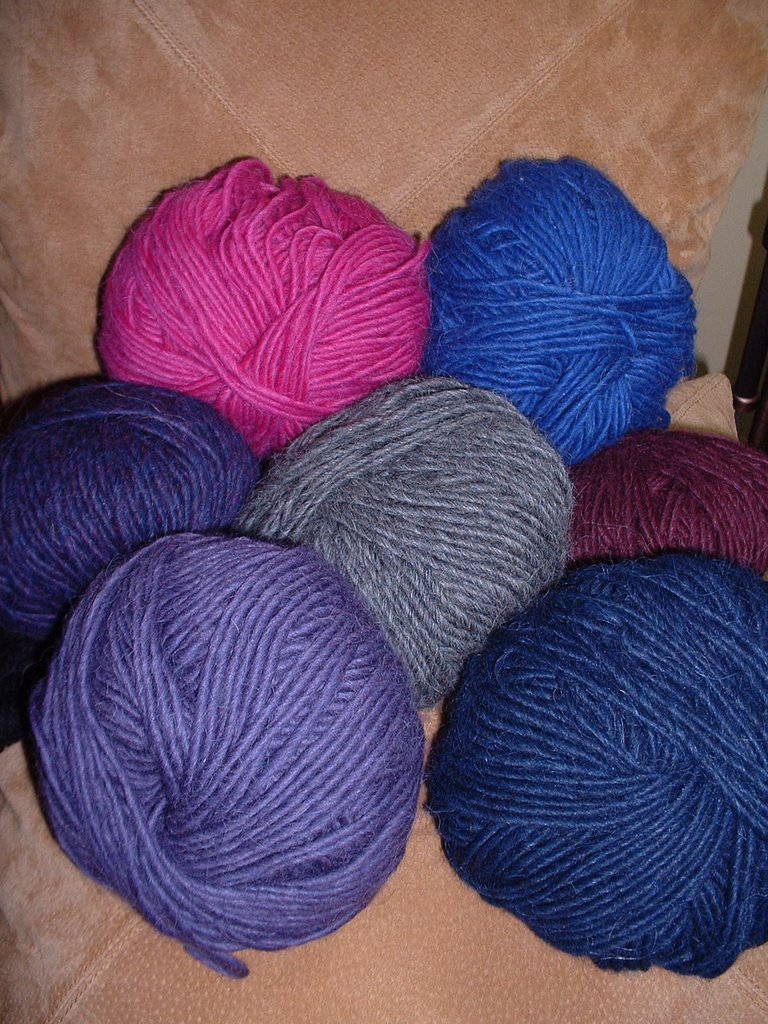
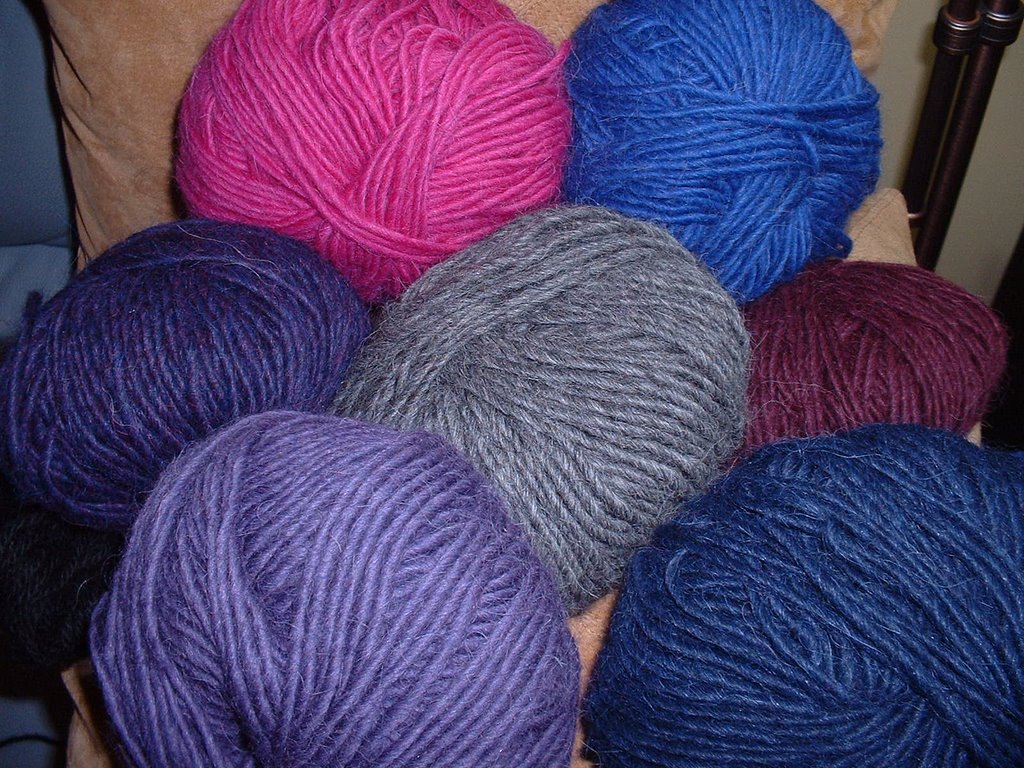
Dazzling Knits by Patricia Werner is the Metropolis Coat. The architectural design is mesmerizing. I had been storing up Classic Elite Montara and Cascade Pastaza for literally years, waiting for something to inspire me. If you haven't seen this book, it's filled with unique modular designs that build one upon the next, picking up stitches from the side of one module to add another. The Metropolis Coat and the Mola Jacket really caught my attention. I decided to stick with the purple-plum-blue tones for the Metropolis. I never would have guessed I would be using ALL my colors of this soft llama/wool blend to make one garment. (Montara and Pastaza are the same, both 50% llama and 50% wool, a somewhat chunky single.) The black lines throughout the pattern are the main color that improvise a stained glass look.

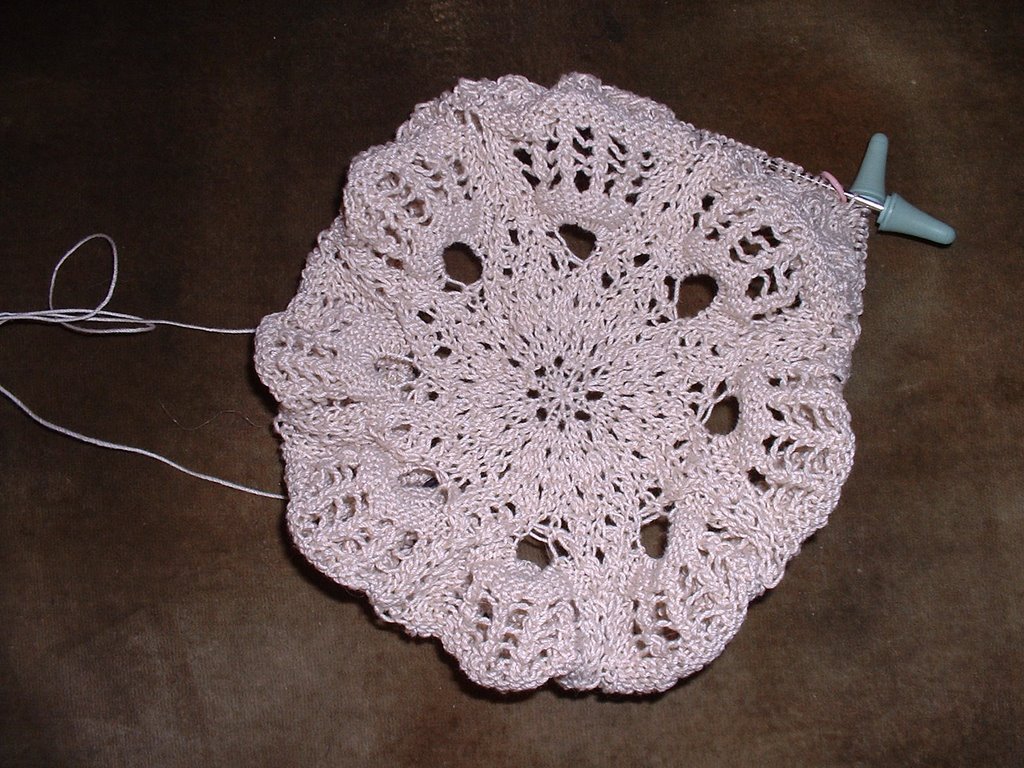
Aside from knitting, work and family pulled me in various directions. It's not surprising that I couldn't pin myself to one project at a time. I also started this small Herbert Niebling doily from the September 2006 issue of the German magazine Lena, purchased from Martina's Bastel und Hobbykiste in Germany. Martina is a member of the Knitted Lace list, and she speaks English. Her website is mostly in German, but if you click on the British flag on the homepage, you'll find it's easier to navigate. The doily is worked in DMC Baroque cotton and size 0 needle. The cotton is not the nicest, with little sheen compared to the lovely DMC Cebelia that I used for the Lyra.

Other cottons I've used are Opera and Manuela. Opera is shiny and smooth, made by Coats, and comes in a wide variety of colors and weights. You can order Opera from
Yarn & Threads by Lisa. She has a good selection of colors and fast shipping. (I am not affiliated.) Supposedly, Manuela thread has been discontinued, but you can still find it in some shops.

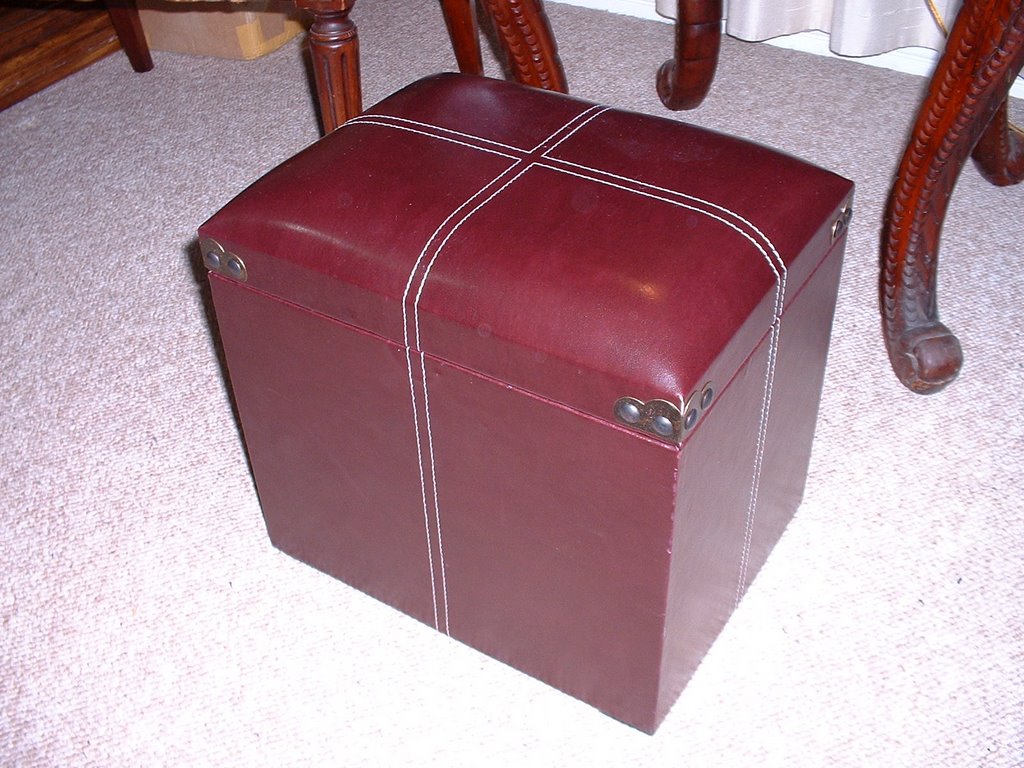
Unfinished projects abound. It's a good thing I found this lovely faux leather box at Joann's last week. It holds a lot and fits nicely next to our sofa. When the lid opens up, it stays up, so I can sift through my knitty bits without too much trouble.

Wednesday, August 30, 2006

Lyra ... Completed!


And here she is!

Saturday, August 26, 2006

Blocking Lyra

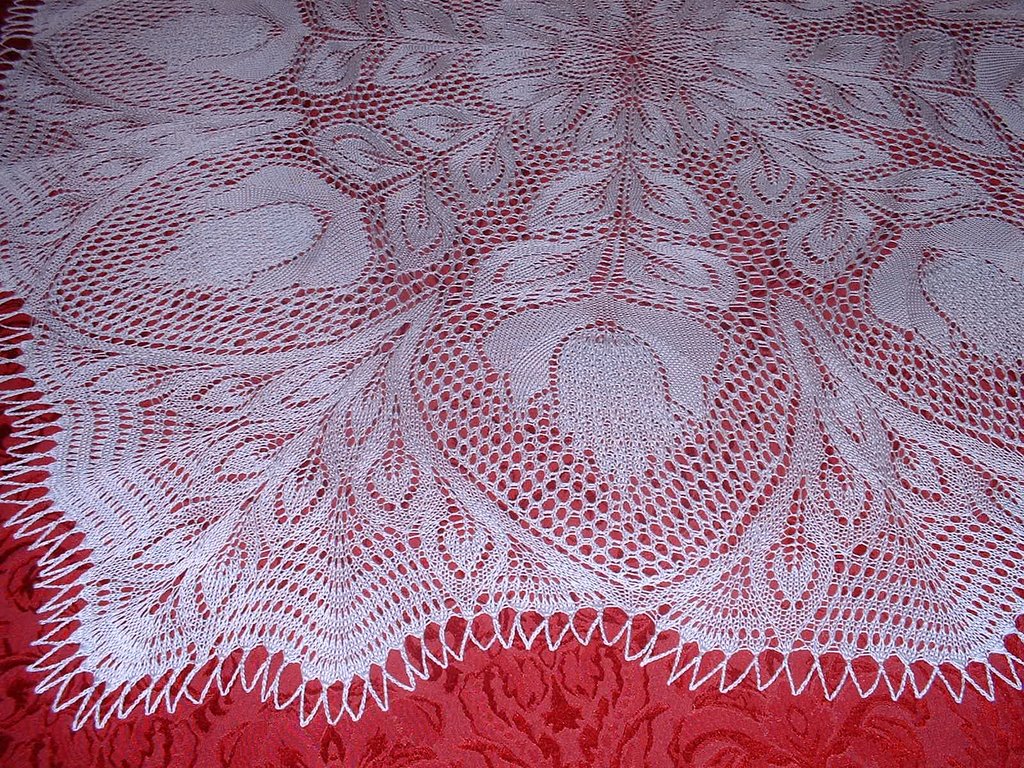
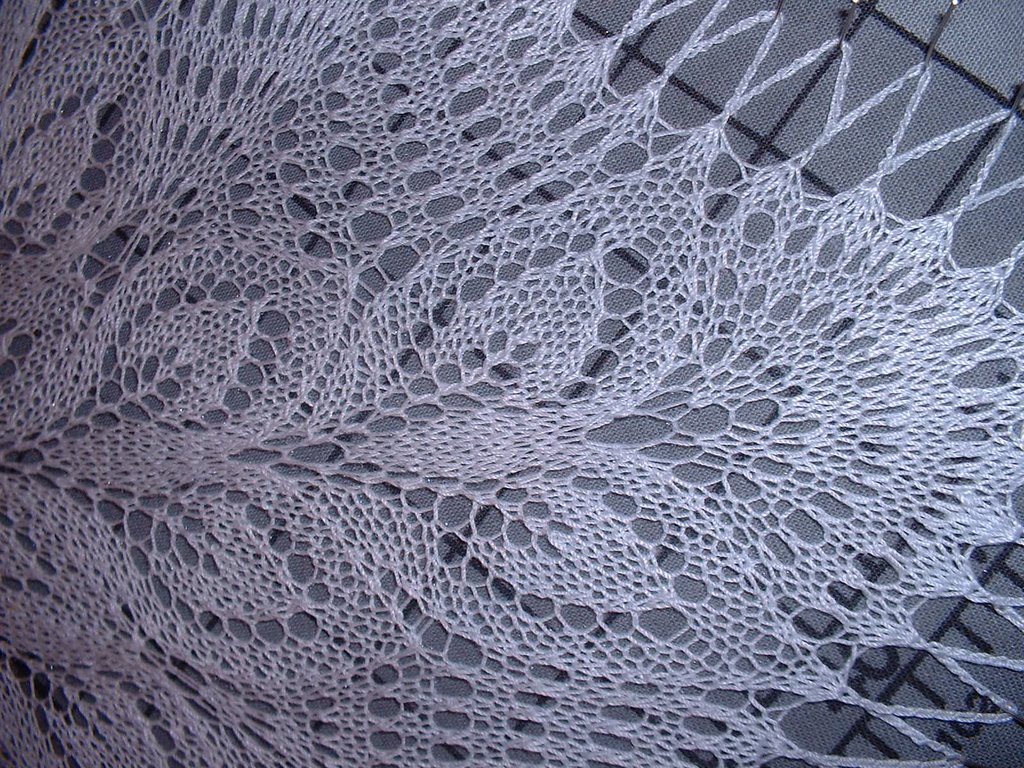
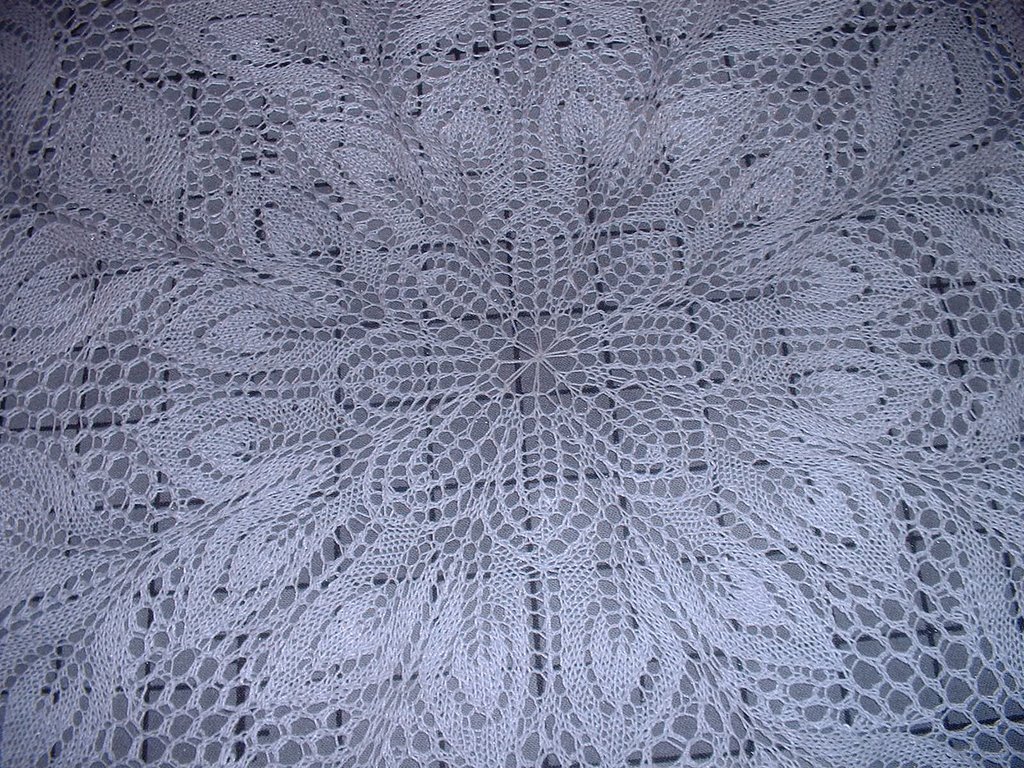
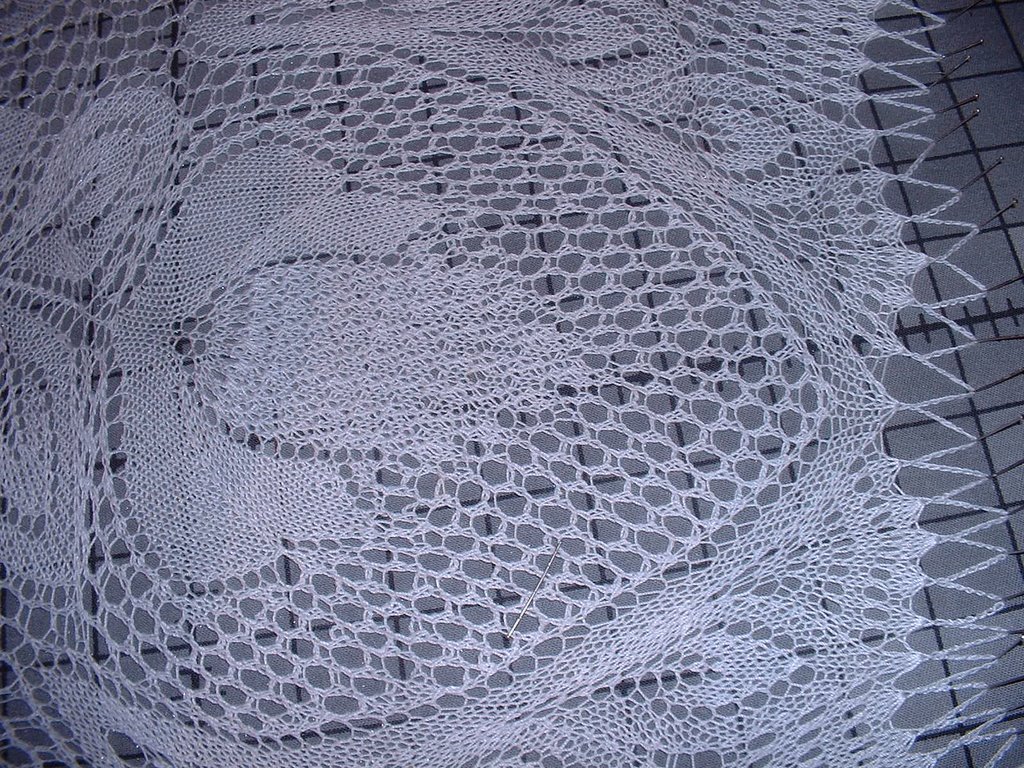
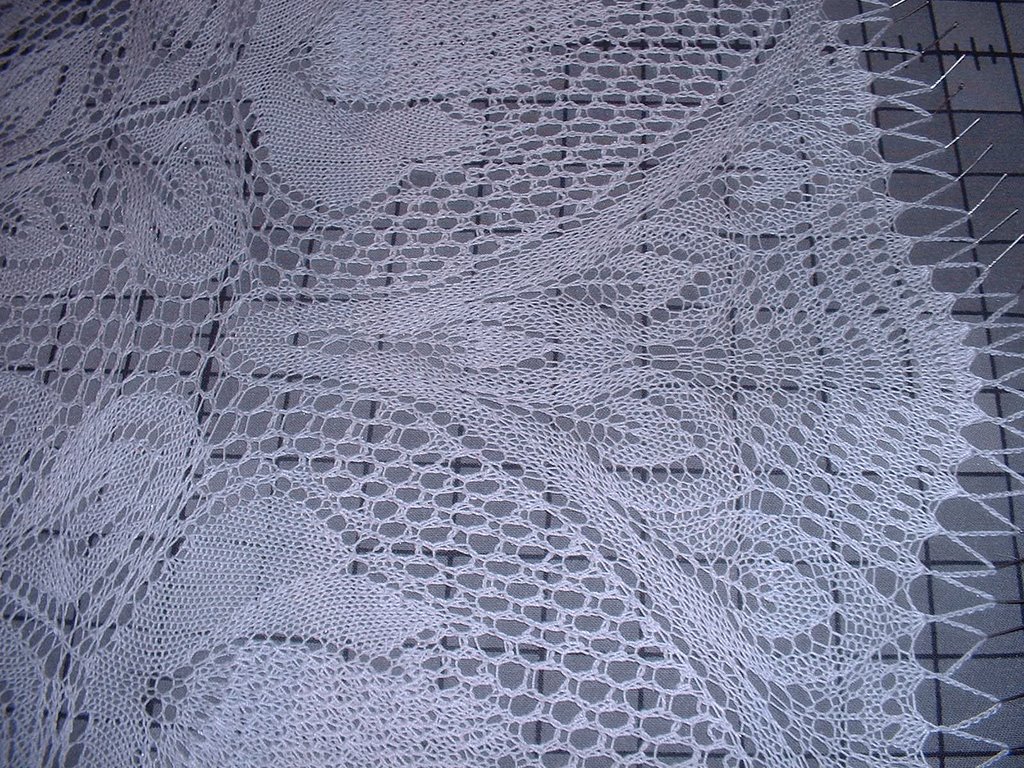
Lyra is finished and being blocked! After many, many days of following an insanely intricate chart, Lyra is finally on the blocking board. I came back from vacation intending to finish it up and spent the better part of this Saturday crocheting the edging, weaving in the loose ends, and pinning it out. My blocking board is about an inch too small in height, so I'm going to have to unpin it after it's dry, give it a quarter turn, and pin out just the center points on two sides.

I'm only posting a few blocking photos now, just to give a sneak peek. As you can see, this is the square version. Does it look square to you? I'm not worried about the shape. Of all the finished Lyras I've seen, it seems to be blocking out just fine. It's my Lyra!

My only advice in blocking Lyra is this: banish the trepidation and go for it! It's scary to look at a fluffy, frilly pile of unblocked lace. With the pins in place, and the lace blooming, you really begin to appreciate the fruit of your labor.

You'll think I'm crazy, but after seeing this completed, I really want to start another Niebling pattern! I'm not sure which one yet. I've got Krokus, Blutenkranze, Eichel and Ruth, and possibly a couple of others.


Niebling ... so addictive ...


Tuesday, August 08, 2006

High Noon at Britex

At lunchtime on Monday, I walked to Britex Fabrics to pick up the finishing touch for my dad's Artisan Vest - horn buttons. His birthday is Tuesday (today), so with no time to spare, I was determined to purchase fabulous buttons, regardless of price.

I took the elevator to the third floor, and the first thing I saw as the door opened was a rack loaded with
Knit Lites, those lighted knitting needles everyone seems to be talking about. Aside from the gaudy neon colors, and the battery packs that seem to weigh the needles down a bit, I suppose they serve a purpose. They come in sizes 6 through 15, but they aren't for me.

Adjacent to the Knit Lites was a carousel of recent knitting books - a small selection, worthy of a browse. The last time I had been to the Notions department at Britex, the yarns available were mostly novelty, fluffy, furry and sparkly. Now they had a wider selection, in cubbies that reached to the ceiling on one wall, and sample scarves and handbags knit from some of the yarns. Another carousel held knitting needles, knit and crochet geegaws, hairpin lace looms, Japanese knotting gadgets, and lots of Clover knitting and crochet needles. One tiny bargain: knitting needle point protectors were $3.50. Two other stores I've been to recently had them at $4.95 and higher. They did have a basket of yarn that was 50% off - mostly novelty, overpriced frou-frou yarn, that should never have been priced at $15-$18 a ball in the first place.

On to the buttons ... the buttons ... oh, the buttons. I'm a closet button freak, so this giant wall of buttons always gives me goosebumps. I inherited a big button collection from my grandfather, who was a tailor in his youth. Maybe that's why I love them. The horn buttons I picked for the vest contrast just enough with the natural
Henry's Attic Prime Alpaca yarn, don't you think?

Monday night I drove to El Granada to knit with the Stitching Sisters. It's always a bit nervewracking to traverse
Devil's Slide, but especially now since the road has only been open a few days. I hadn't been over the Slide since it had closed in April. With mere hours left before my dad's birthday, I brought the vest and the buttons with me to the gathering. However, I forgot the thread to sew them on. I had to wait unit I got home to attach the pretty treasures to their rightful places. My father's birthday gift was finished after midnight, today, on his birthday.

Sunday, July 16, 2006

The Amazing Lace Challenge #4: Straitjacket


Strait-jacket \Strait"-jack`et\, n. A dress of strong materials for restraining maniacs or those who are violently delirious.

Ninety-nine bottles of beer on the wall ... ninety-nine bottles of beer ...

Sunday, July 09, 2006

Sucker for a Good Yarn Sale


My knitting group, the
BAWDies (Bay Area Wool Divas) met today at Allyne Park in San Francisco. Since our regular Sunday spot, Valencia Street Books, recently closed, we've been on the lookout for a permanent place to meet on Sundays. In the meantime, we're a floating knitting group - not unlike a floating crap game - and we pass the word of our meeting places along to our members via a well-established Yahoo group.

After knitting, Tina of
Knitwhits and I walked down to Greenwich Yarn, which is having their annual yarn sale. I must admit, I was a bit apprehensive. The last time I had been there, I didn't feel welcome, almost a burden to the salespeople. This time, my experience was completely different. The salesperson was courteous and helpful, and didn't make a fuss when I mentioned I had a store credit to use. The sale was in full swing - many yarns on the shelves were marked down. And on the back patio, baskets and tables piled with high-end yarns marked way, way down made me gasp. I had to avoid touching the luscious Classic Elite Lush (angora and wool) - so soft, it's nearly irresistible. Debbie Bliss, Lang and Rowan were among the choices on the sales tables. Temptation was almost too much for me. I did pick up some goodies pictured here.

Madil "Film" - 60% viscose, 40% tactel, 25g, 87m (gold, fine, Italian ladder yarn)
Louisa Harding "Impression" - 84% nylon, 16% mohair (sportweight, supersoft, slightly glam Italian yarn)
GGH "Marathon" - 75% superwash wool, 25% polyamide (sock yarn from Germany)

The sale is worth a trip. It runs through the end of July.

One weird thing: If you're out there on the back patio looking at oodles of smashingly good wool and things, and you hear profanities beyond the back fence, don't worry. A neighbor hanging his laundry on the line may repeatedly announce, "... f***ing wind ..." and intermittantly curse is blasted socks.

Sunday, July 02, 2006

Monet and A Tale of Two Beanies


What a lovely foggy day in San Francisco! My sister, my brother-in-law, my friend and I decided to visit the Legion of Honor's Monet Exhibition which runs through September 17, 2006. The exhibit comprises 53 paintings by the artist Claude Monet. Admission is $15 and includes the exhibition, plus access to the Legion of Honor and the DeYoung Museum all day. (On the first Tuesday of the month, admission is free, but you must pay $5 for the Monet exhibit.)

We arrived early at 10:00 am. The parking lot was nearly full, and the crowds were thickening. We managed to see everything (twice) by the time the crowd became overwhelming.

My favorite paintings were "Road at La Cavee" and "Low Tide at Varengeville." Seeing them up close is inspirational. The colors and textures cannot be captured in the books and prints of Monet's work that we so often see. We also toured the Legion’s resident collections, including works by Rodin, Rembrandt, Matisse, Picasso and more.

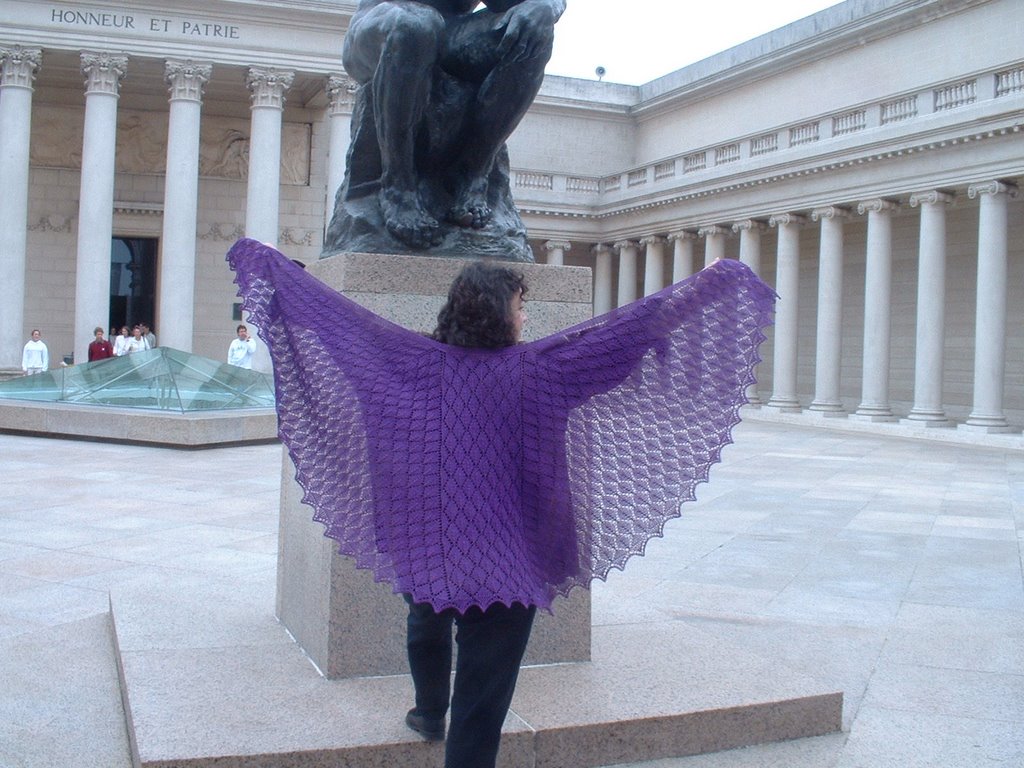
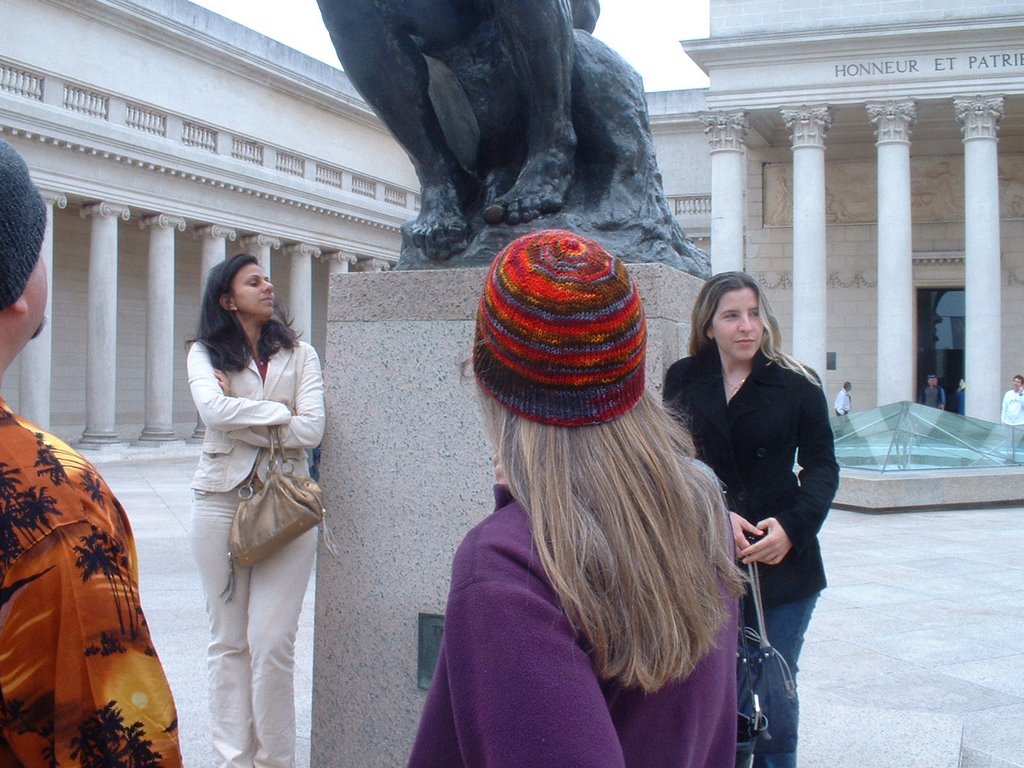
We stepped outside into the light of day and the fresh foggy air to snap some photos of my sister in her new Susan Shawl, a gift from me. Also, I presented my brother-in-law and my friend with their very own handknit beanies.

The grey beanie is 100% baby alpaca and the multicolored beanie is 100% hand-dyed superwash wool from Interlacements. The pattern is very simple and easy to memorize.

OceanKnitter's Basic Beanie

Gauge:
22 sts and 24 rows = 4" x 4"


Materials:
50 grams DK weight yarn (two balls to be safe)
Size 5 - 16" circular needle
Size 7 - 16" circular and dpns (dpns to finish the crown)
Tapestry needle


Cast on 90 sts with smaller needle.
Join in the round.
K1P1 rib for 1.5 inches.
Switch to larger needle.
Knit in stockinette for 3.5 inches (snug) or 4 inches (if you want a little air in the top)


Decrease rounds:
Rnd 1: *K2tog, K8, repeat from * around

Rnd 2 and all even rounds: Knit
Rnd 3: *K2tog, K7, repeat from * around
Rnd 5: *K2tog, K6, repeat from * around
Rnd 7: *K2tog, K5, repeat from * around
Rnd 9: *K2tog, K4, repeat from * around
Rnd 11: *K2tog, K3, repeat from * around
Rnd 13: *K2tog, K2, repeat from * around
Rnd 15: *K2tog, K1, repeat from * around
Rnd 17: *K2tog, repeat from * around
Rnd 18: Knit last round


Cut yarn leaving about an 8" tail. Thread tail through remaining stitches with a tapestry needle. Sew in ends.

Monday, June 12, 2006

The Amazing Lace Challenge #2: A Lifeline Runs Through It


When I began several months ago to knit Lyra, I dutifully added two lifelines at strategic points. Since Lyra has been neglected for the past few months, she decided to break one of her lifelines, just to cause me worry. I guess sitting in my knitting basket unattended, a youngster will get into trouble.

For those unfamiliar, a lifeline is usually yarn or thread of a different color woven through all the stitches of one row, using a sewing needle. This is best accomplished after completing a plain row in lace knitting - i.e., a purl row. If I were to drop a stitch or make an error, I could rip back to the lifeline and not lose any stitches. I should add another lifeline, but I keep thinking about the Labor Day deadline and how much time it will take out of my knitting schedule.


So, I'm now on Row 134, and I'm knitting without a net. With 1,004 stitches currently on the needle, that's pretty X-treme. From Row 124 to Row 134, I've knit 12,412 stitches. I don't know if I can keep up this pace. Lyra is running me ragged. Her gauge is tiny, at about 11 sts/inch in stockinette, and she's feisty and particular. She wears me out, but I'm thrilled with her progress.